
All About Shatta
My Memory Jar - 1st edition

Welcome to my new series, MY MEMORY JAR, where I give the stage to flavor lovers around the world to share their community’s preferred condiment.
“We didn’t set out to start a condiment company; we set out to share a flavour that felt like home.” Zee Massoud, Get Your Fil
As I’ve dived further into this world of jarred goods, spices, and more it’s become very apparent to me that condiments are that flavor element that speaks to the culture in every dish. Whereas taste is salty, sweet, bitter, acid, and umami, flavor on the other hand is that element that encapsulates not only color and texture but also nostalgia and memory.
While our modern world is so interconnected, we can always give ourselves that extra push to step outside of our comfort zone and learn about people and places other than our own. My way of doing so is through flavor.
Regardless of how much I can research a specific condiment from a country other than my own, I will never fully understand or be able to write about it as well as someone who grew up with it can. Today’s edition features the Palestinian condiment shatta first introduced to me by Zee at Get Your Fil who is also the author of the piece below. I hope you enjoy learning about it as much as I have and hopefully you can get your hands on some soon.
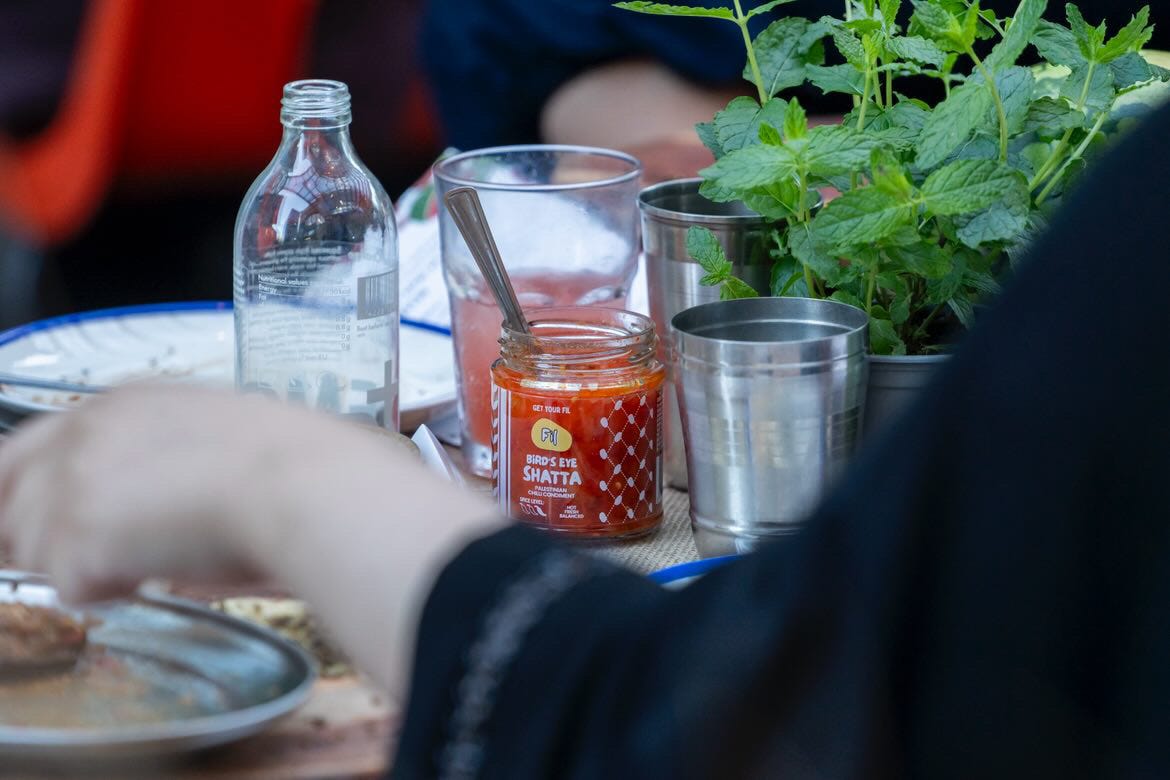
What is shatta?
Shatta ( شطّة ) simply means (hot) pepper in Arabic. Over time, it’s become the general term to describe anything spicy from the Levant to Egypt and beyond.
Shatta is a ‘simple’ condiment, which is what makes it so interesting. As chefs like Sami Tamimi, Fadi Kattan, and Laila El-Haddad often note, it may not be the centrepiece of the table, but it’s absolutely central to Palestinian cuisine - especially in Gaza, where it originates.
Identifying the exact history of Shatta is difficult, as it lives more in the memory of kitchens than in cookbooks. However, we do know it originated in Gaza, and its uses are deeply practical. Before refrigeration, preserving fresh produce was an act of necessity for prolonging the life of ingredients. Palestinian cooks, often women, would ferment the native chilies of Gaza by salting and sun-drying them, then topping them with a layer of extra virgin olive oil. This not only extended the life of the chilies but also deepened their flavour, ensuring that sharp, bright heat was always present on the dining table throughout the year.
A beautiful piece in VICE, “In War-Torn Gaza, Hot Sauce Remains a Comforting Staple” captures the spirit of shatta perfectly. It describes how, after 1948, when thousands of Palestinians settled in Gaza as refugees, condiments like shatta became acts of identity; small daily rituals that quietly said, we’re still here. Food became memory, resistance, and belonging all at once. Even during the current genocide, the Gazan chili, known for its ability to grow and survive in harsh conditions, and for its rich nutritional value, remains a vital staple when food is scarce. A condiment already rich in cultural significance has become so much more to the people of Gaza and Palestine.
How is it made and who makes it?
Traditionally, shatta is made at home. Every grandmother, every family, every village seems to have its own version. Like most Arab kitchen staples, one might have a little more lemon, another a touch of garlic, or none at all. Families blessed with steady sunshine often sun-dry their chilies before fermenting, while others skip that step. It’s one of those recipes that travels in stories, not in measurements.
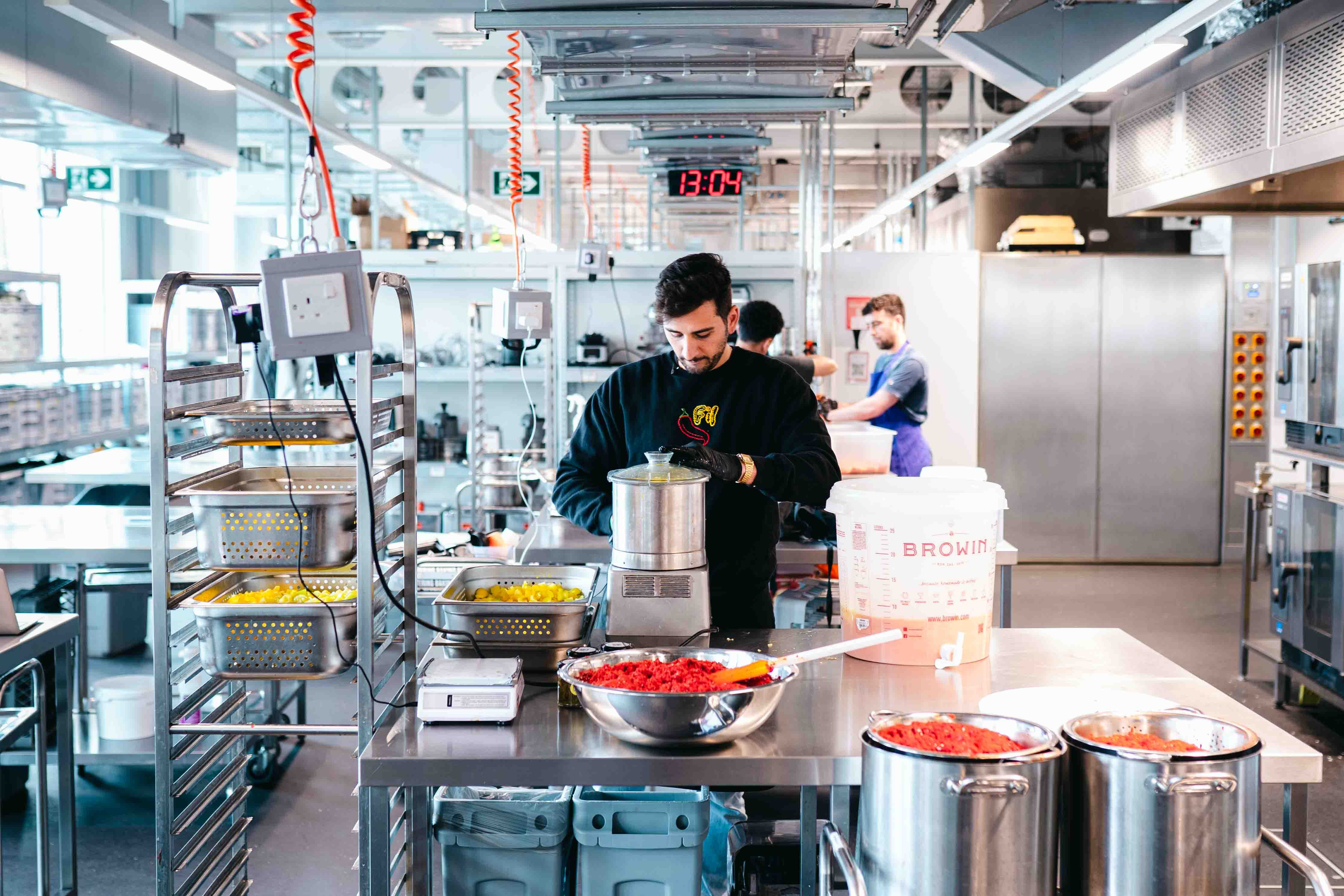
At Fil, we’ve held onto the spirit of traditional, but adapted our recipes for a more global audience, and with what we have available in Europe. We still use lacto-fermentation, the age-old technique of using salt to draw out moisture from fresh ingredients and create the perfect environment for science to work its magic.
The core of our shatta is the bell pepper, which we ferment alongside selected chilies to give each variety its own flavour, colour, and heat level. The bell pepper adds natural sweetness and fruitiness, creating a soft foundation that allows the chili to take centre stage. We also use a blend of vinegars to extend shelf life and give a fresh finish of acidity. And of course, no Palestinian shatta would be complete without Palestinian extra virgin olive oil, which adds a sweet, peppery note that ties it all back to the land.
How is it traditionally served? Is it eaten for a special occasion or every day?
Shatta is an everyday companion. It doesn’t wait for a special occasion.
On the Palestinian table, it sits firmly beside salt, pepper, and extra virgin olive oil. At breakfast, it’s spooned over labneh or hummus, served with eggs, or spread inside a falafel wrap. By lunchtime, the main meal of the day, it brightens stews and adds heat to grilled fish and meats. Come dinner, it inevitably finds its way next to whatever food is eaten to end the day. It’s that quiet constant, the final touch that brings the meal to life.
Any usual pairings and more untraditional pairings?


Traditionally, Shatta is paired with falafel, grilled meats, eggs, stews, fish, and dishes like ful or hummus. It’s even eaten as a sandwich filling. There are usually two kinds: red Shatta, which brings deep, fiery heat, and green Shatta, which offers a milder, fresher, more herbaceous flavour. Different dishes and preferences call for one of the other. Sami Tamimi references both within his cookbooks, and Fadi Kattan serves both red and green Shatta side by side at his restaurant Akub in London.
At Fil, we’ve created Shattas that pair beautifully not just with Palestinian food, but with dishes from all over the world. We now have five different shatta products, each with its own character.
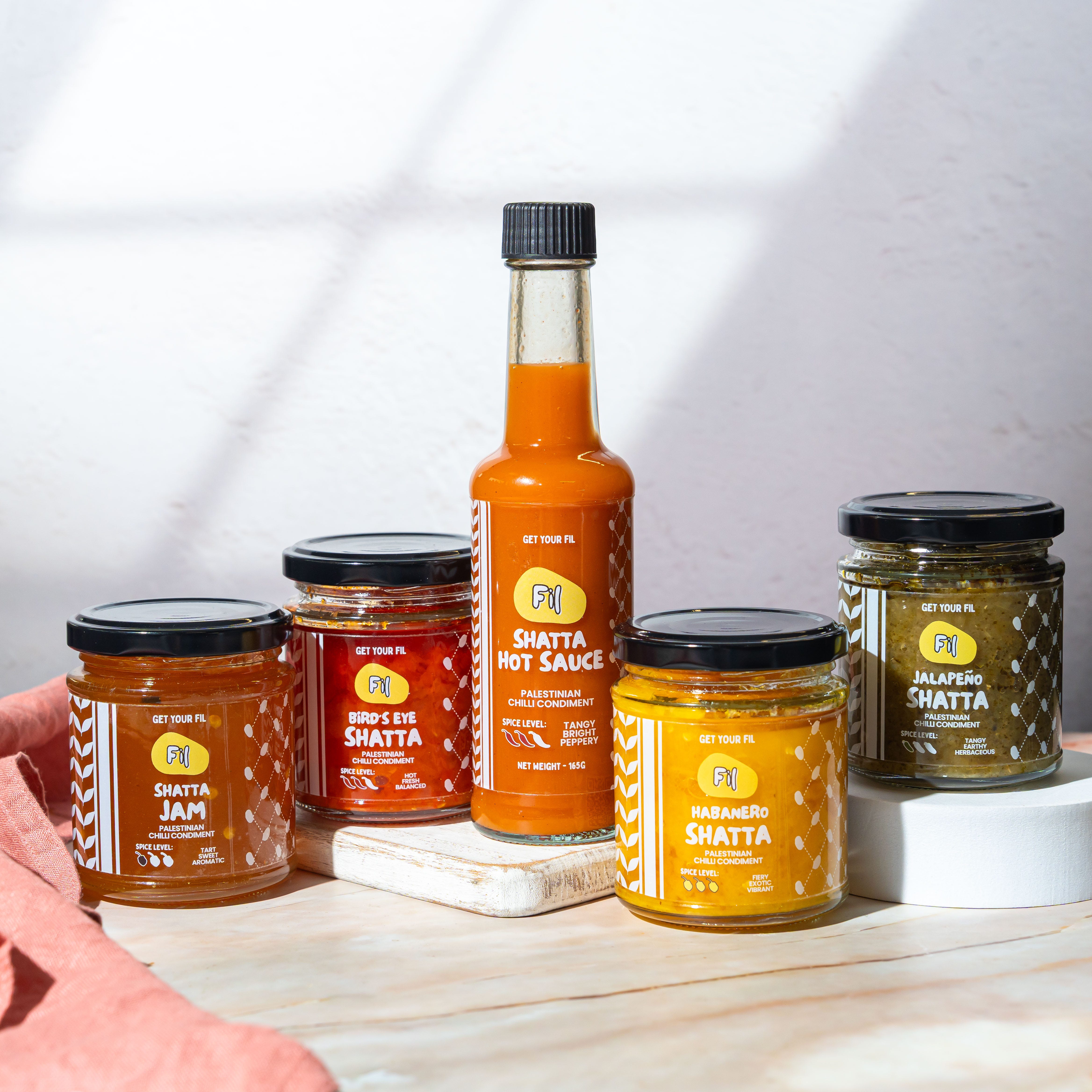
Our Jalapeño Shatta is our take on the traditional green Shatta; bright, punchy, and versatile. I love using it in sandwiches, salads, or with grilled meats.
The Bird’s Eye Shatta is our closest to a traditional red Shatta. It’s fantastic with Middle Eastern dishes, but I find myself using it with anything from Italian to Thai. Personally, it has also become my replacement for fresh chilli. In fact, I don’t have any fresh chilli in the fridge anymore.
Our Habanero Shatta was our first step beyond tradition. It has a unique, fruity sweetness and an exotic depth of flavour. I’m obsessed with mixing it into peanut satay sauce and spooning it over chicken and rice. It’s also perfect for tacos or Caribbean dishes.
We’ve also created our award-winning Shatta Jam, which represents the more contemporary side of Fil. It was born from a zero-waste approach - repurposing the fermentation brine from our shatta to create something new. It’s reminiscent of a chili jam and pairs beautifully with cheese toasties, fried or grilled halloumi, or on a Christmas cheeseboard (hint hint).
Finally, our Shatta Hot Sauce, another zero-waste innovation, takes inspiration from the classic pepper sauces found across the Middle East. However, by emulsifying it with extra virgin olive oil, we’ve created a more luxurious texture and a deeper, rounder flavour. It’s incredible with wings, and honestly, unbeatable with oysters (sorry, Tabasco).
How did you get started with this business?
Fil really started as a lightbulb moment back in April 2023, though we only began officially trading in February 2024.
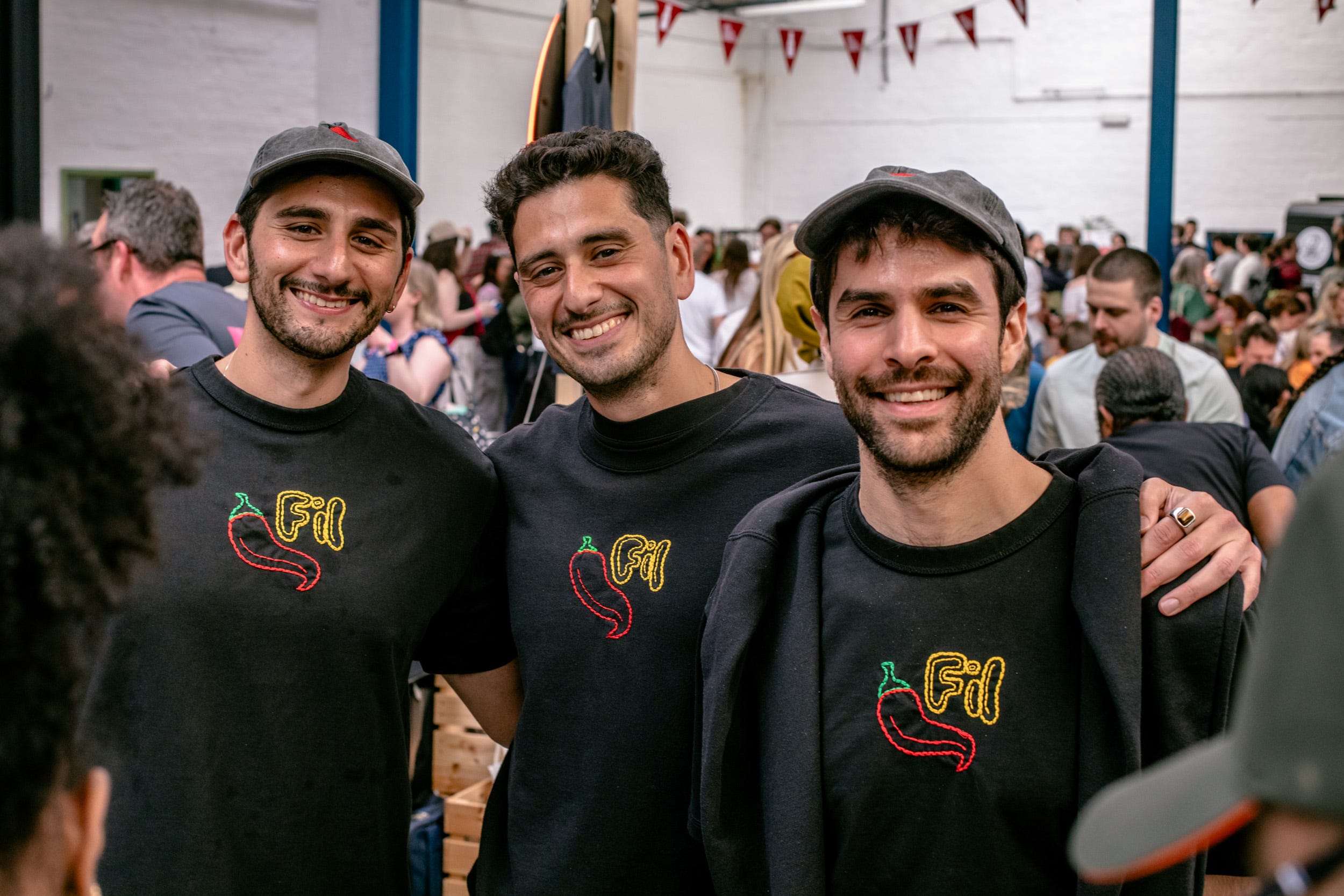
It began with three Palestinians, two brothers (Layth and Zee) and their childhood friend (Karim), who grew up eating Shatta. Between 2020 and 2023, Layth and I were living together in Amsterdam, exploring how Levantine flavours could be reimagined and paired with other cuisines to create more contemporary dishes.
For our first supper club, Layth made a version of red Shatta that was less salty, more balanced, and had something special about it… something new yet deeply familiar. Karim came as a guest that night, tasted it, and had that same realisation. That moment was the spark for Fil.
We didn’t set out to start a condiment company; we set out to share a flavour that felt like home.
For us, food has always been the most natural way to share who we are. The dining table was the heart of every home growing up. It’s where conversations flowed, where stories were told, where everything was shared. It’s how Palestinians express love, generosity, and belonging.
Palestinian culture isn’t widely known, and often it’s only experienced second-hand through news headlines. We wanted to change that. We wanted to give people an easy, joyful way to experience our culture for themselves, in their own kitchens. Through Fil, we’re trying to shine a positive light on Palestine and its culture, one spicy spoonful at a time.
What makes your product different?
Our Shatta is rooted in tradition but adapted for a global audience. We’ve created a red Shatta with Bird’s Eye chilies, a green Shatta with jalapeños, and even a yellow Shatta with habaneros. The goal was never to move away from our heritage - it was to invite more people in, and to explore what Palestinian identity can mean for those of us born and raised in the diaspora. By using chilies familiar to global palates, we hope to make Palestinian culture more accessible and more present on tables everywhere.
What truly sets Fil apart is how we approach sustainability and creativity. We’ve developed two zero-waste products that are completely unique to Fil - our award-winning Shatta Jam and our Shatta Hot Sauce, both made by repurposing the fermentation by-product from our shatta.
We also work closely with Al’Ard and Zaytoun, two remarkable companies we source our olive oil from. Since June 2025, every Fil product has been made using Fairtrade Palestinian olive oil, ensuring authenticity, traceability, and meaningful impact.
So even though our shatta takes a contemporary form, every jar still carries the flavour, story, and resilience of Palestinian land and farmers, shared through something as simple, and as powerful, as a condiment.
Where can people find your product?
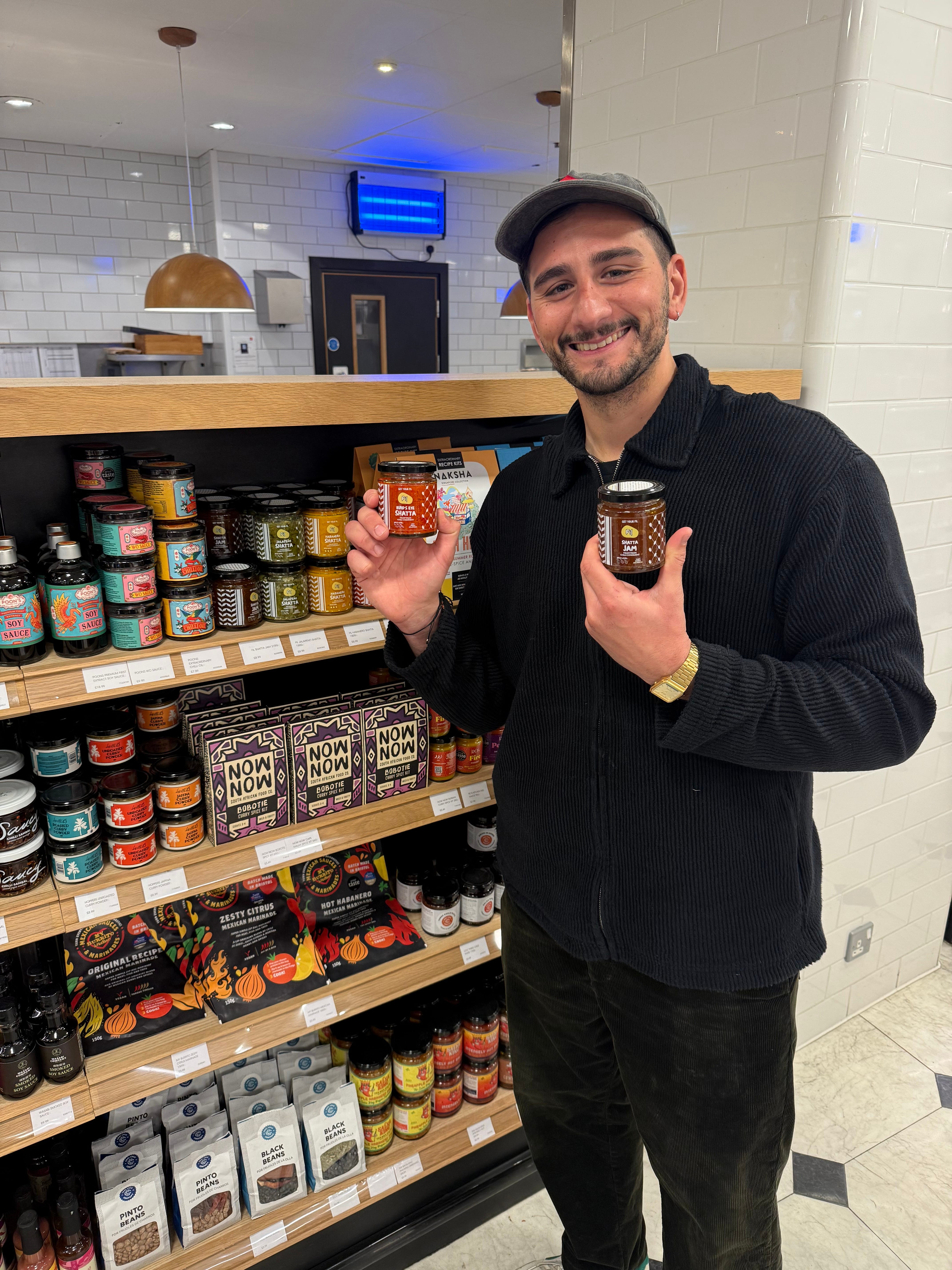
Our products are now available in over 30 stores, including Selfridges Foodhall, as well as through our website and a growing list of independent retailers across the UK and the Netherlands. You can find the full list of our stockists on our website.
Wherever you find us, we hope our Shatta brings a small taste of Palestine to your table. So join us in celebrating our culture, one spicy spoonful at a time, and Get Your Fil.
I hope you enjoyed the first edition of this newsletter! If you have a condiment you hold dear to your heart and that you’d like to write about, write me a comment here below and let’s get chatting! Thank you all for sharing your taste of home with me.
Thank you for this piece. In the midst of an ongoing genocide, food continues to be a central act of resistance. Please continue to share what you learn about how condiments preserve the history of oppressed people. Their stories remind us that food is not just about survival.
I love this, loved hearing Zees story. In times of great division, how wonderful to connect through food. I immediately purchased some shatta and cant wait to try.